
Sports
Former NFL coach Rex Ryan surrenders on hit-and-run charges involving 2 pedestrians
By Aisha K. Thompson
Advertisement · Why this ad?
Trevor, a University of Delaware alumnus, has been covering local sports for over 6 years, focusing on high school athletics and youth leagues. He previously worked with the Delaware County Daily Times and brings a strong sense of urgency to his reporting. Trevor's passion for sports is matched only by his commitment to uplifting local athletes.
More from Trevor →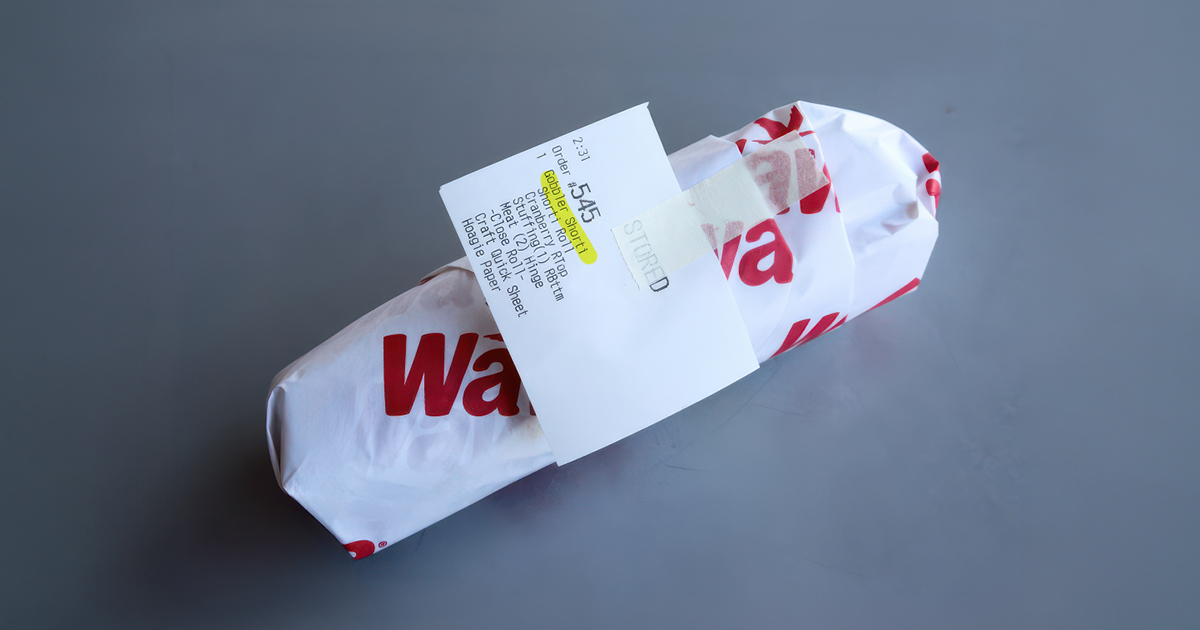
News How the Gobbler Conquered America The century-long history of the iconic Thanksgiving sandwich, from a peanut butter-mayo-turkey combo (yuck!) to convenience store stardom. By Victor Fiorillo · 11/11/2026, 1:46 p.m. A wrapped Wawa Gobbler at a Wawa in New Jersey / Photograph courtesy of Dave Cook/Eating in Translation Listen to the audio edition here: It’s officially Gobbler season in the Philadelphia area, with Delco-based Wawa selling scads of their diet-busting Thanksgiving-on-a-roll sandwiches up and down the East Coast. And it’s not just Wawa. Over the years, Gobbler mania has gripped the region, with restaurants now offering their own takes on the sandwich. There are even — brace yourselves — vegan Gobblers! Somewhere, a poultry farmer just shed a tear.Given our seasonal obsession with the Gobbler, I was curious of the Gobbler’s origin story. Did it all start with Wawa? The answer is decidedly no. According to an extensive search I conducted of old newspapers, the word “gobbler” has been used by restaurants for more than one hundred years, but typically just as a cute name for a regular turkey sandwich or other turkey dishes. (I recall my childhood diner, The Diamond Diner in Pine Hill, New Jersey, using the same name for the kids’ menu version of a hot turkey platter.) The history of Thanksgiving-leftover sandwiches is a long one; folks have been putting leftover turkey on bread for as long as turkey and bread existed. Other variations existed, too, even in my own life. I recall my maternal grandmother, Nanny, who was Pennsylvania Dutch, making the most ridiculously good bread stuffing in a crockpot (my mom still makes it to this day), and then forming the bread stuffing into patties on Friday and frying them up in butter and serving them in between two slices of Wonder Bread. Related: The Art of the Gobbler Is the Gobbler Wawa's Best or Worst Sandwich? All of Wawa's Sandwiches (Yes, Including the Gobbler!), Ranked I telephoned my mom, Fran, who now lives a happy vegan life in Florida, to get her memories from day-after-Thanksgiving dining. Her fondest memory was courtesy of her mother-in-law, my Mom-Mom. “My favorite thing to do the day after was to have Mom-Mom’s filling in a sandwich with ketchup,” my mom says, referring to an oniony beef stuffing that my grandmother used to make each year. “That’s what I’d look forward to more than anything else: the meat filling in a roll with ketchup.” Alas, Mom-Mom’s meat stuffing recipe appears to have been lost forever after she died in 2001. But enough reminiscing: What about sandwiches that combined said turkey with other leftovers? References to leftover Thanksgiving sandwiches in books, journals, and other media date back until at least the beginning of the 20th century. A 1915 journal article published by the Modern Confectioner Publishing Company — which encouraged candy stores to offer items other than candy — suggested a sandwich containing turkey, cranberry sauce, and mayonnaise to boost revenue. In 1950, the USDA published a recipe for a sandwich containing turkey, stuffing, and gravy. A few years later, the Boston Globe went with a recipe for the “Man’s Special Turkey Sandwich” that featured turkey, cranberry sauce, stuffing, and gravy. “Men naturally want to cook with flair and they recognize that theirs is a role that calls for a touch of genius,” wrote the Globe. “Only a man could dream up a hot turkey sandwich like this.” Okay then! There were some sandwiches that purported to be “Thanksgiving” sandwiches that didn’t quite make the mark. On the “What Women Are Doing” page in the November 25, 1949 edition of the Brooklyn Eagle , which was, at one time, the afternoon newspaper with the largest circulation of any in the entire country, a French chef in New York raved about his own “Thanksgiving sandwich”, which was “sliced turkey and American cheese between slices of white bread that have been dipped in raw egg,” with both sides being fried until golden brown. Hardly a Gobbler. There was a “Glazed Gobbler” that was an entry at a Chicago food show in June 1961, but that was with luncheon turkey — not Thanksgiving turkey — though the sandwich did have a nod to Thanksgiving with its “cranberry gelatin.” The sandwich also sported sliced avocado and American cheese, which pretty much takes it out of the running as anything Gobbler-esque. (It’s worth noting, though, that you can get American cheese and avocado on your Wawa Gobbler, in addition to pretty much any topping that Wawa offers. Blasphemy.) And I’m just going to ignore the wrongheaded 1974 appearance of a “Goober Gobbler,” which somehow combined peanut butter, mayonnaise, and diced turkey, among other things. Bring back the firing squad. Some New England loyalists think that their region was the progenitor of the Thanksgiving-leftover sandwich, which is referred to as the Pilgrim or the Puritan in those parts. But, really, the history of all of this is murky at best. In terms of using the word “Gobbler” to refer to a Thanksgiving-leftover sandwich, we turn to the March 21, 1992 edition of the Orlando Sentinel , which published a piece on the since-shuttered Darryl’s Restaurant and Bar in Kissimmee, Florida. That article briefly mentioned the restaurant’s Gobbler, “advertised as a Thanksgiving dinner between white bread — the soft, mushy kind of white bread kids love,” per the story. No further details were provided, so we don’t actually know what was on the sandwich to constitute “Thanksgiving dinner between white bread.” But that’s the first reference I could find to a “Gobbler” that actually resembles our Gobbler. Regardless, just a few months later, Kraft, the owner of Stove Top, took to newspapers all over the country with 35-cent-off coupons for boxes of Stove Top and an accompanying recipe for a sandwich. You’d slather bread slices with mayonnaise and then layer Stove Top chicken-flavor stuffing, cranberry sauce, and turkey. Kraft called this sandwich, yes, the Gobbler. It wouldn’t be until 16 years later that Wawa would make the Gobbler a seasonal addition to its menu in perpetuity, thereby changing our lives forever. Wawa introduced the Gobbler as a pilot in 2008. In 2009, the Gobbler — which cost just $2.99 — returned to Wawa due to popular demand, with spokesperson Lori Bruce telling NBC 10, “We underestimated how many people would want it.” Wawa showed a bit of restraint in its earlier years, too, not releasing the Gobbler until mid-November, as opposed to its current September debut, which is a little like pushing Halloween decor before Labor Day. Okay, enough of this history lesson. Is this thing actually any good? The most attractive photo of a Wawa Gobbler that you will ever see. “Is there a better sandwich at Wawa?” wrote Philly Mag restaurant critic Jason Sheehan in his definitive 2018 ranking of Wawa sandwiches . “No, there isn’t. It is comfort on a roll. A portable Thanksgiving dinner. Warm and sloppy and cheap and delicious all at the same time. My only complaint? That it isn’t available 365 days a year. Or sometimes after 9 p.m. And that it doesn’t automatically come with a side of mashed potatoes to dip the entire sandwich in.” So there you have it. Did Wawa invent the Gobbler? Absolutely not. But I hope that I’ve given you a good topic of conversation for when you are awkwardly sitting around with your extended family on Thanksgiving while Uncle Fred is snoring in the recliner, the Eagles-Cowboys game is on TV, and you are desperately trying to figure out what the hell to talk about. Happy Gobbling! Read More About: Sandwiches Thanksgiving The Gobbler Wawa Victor Fiorillo Senior Reporter at Philadelphia Magazine @phillyvictor [email protected] You Might Also Like Philly’s Most Legendary Signature Cocktails The Best Philly Sports Bars for Watching the Eagles Where to Eat in Chinatown
By Aisha K. Thompson

By Aisha K. Thompson

By Aisha K. Thompson
By Trevor M. Kowalski